

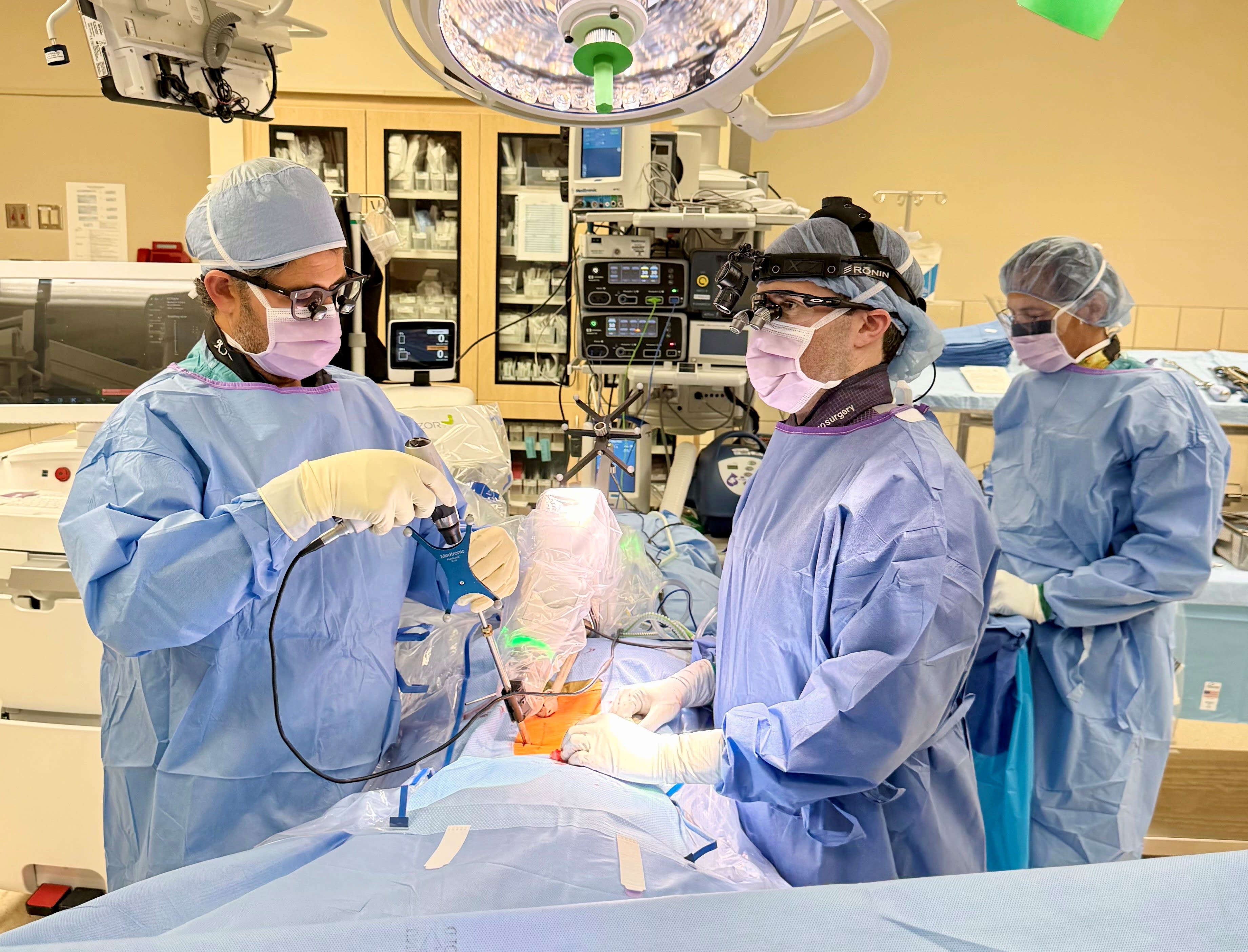
Robotic spine surgery combines three tools: detailed 3D imaging, real-time navigation and a robotic guide, giving the surgeon a live, three-dimensional view of the spine.
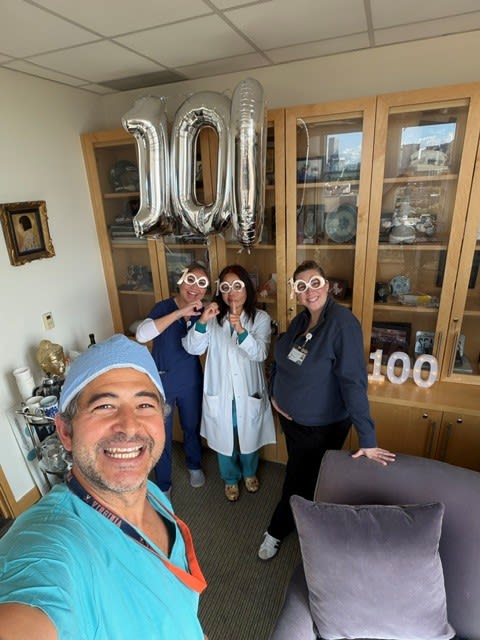
Providence Swedish Neuroscience Institute recently performed its 100th robotic spine surgery. The milestone reflects the surgical team's growing expertise and Providence Swedish's commitment to giving patients the most advanced, minimally invasive spinal care available.
"Robotic spine surgery is still offered at a limited number of centers in our region, so reaching 100 cases is a meaningful step," said Rod Oskouian, M.D., neurosurgeon at Providence Swedish Neuroscience Institute. "Patients can get advanced spine care close to home."
How it works
Robotic spine surgery combines three tools: detailed 3D imaging, real-time navigation and a robotic guide. Before the operation, the surgeon uses the imaging to plan exactly where each screw will go and what size it should be. During surgery, the robot guides the surgeon in following that plan with a high degree of precision.
Throughout the procedure, the navigation system gives the surgeon a live, three-dimensional view of the spine. This is especially helpful in complex cases and in revision surgeries, which correct or update an earlier spine operation. Because the system relies less on repeated X-rays during surgery, it also reduces radiation exposure for the surgical team.
That level of precision can make a real difference in a patient's care and recovery:
- More accurate screw placement, which matters most near the spinal cord and nerves
- Smaller incisions, with less disruption to the surrounding muscle and tissue
- An easier recovery: often less pain after surgery, a shorter hospital stay and a quicker return to everyday activities
Is it right for every patient?
About Providence Swedish
Providence Swedish has served the Puget Sound region since the first Providence hospital opened in Seattle in 1877 and the first Swedish hospital opened in 1910. The two organizations affiliated in 2012 and today comprise the largest health care delivery system in Western Washington, with 24,000 caregivers, eight hospitals and 244 clinics throughout Western Washington – from Everett to Centralia. A not-for-profit family of organizations, Providence Swedish provides more than $545 million in community benefit in the Puget Sound region each year. The health system offers a comprehensive range of services and specialty and subspecialty care in a number of clinical areas, including cancer, cardiovascular health, neurosciences, orthopedics, digestive health and women’s and children’s care. For more information, visit providence.org/swedish.
About the Author
More Content by Swedish Neuroscience Team


