


[5 min read]
In this article:
- June is National PTSD Awareness Month, which is dedicated to highlighting the effects of trauma, effective treatments and an end to mental health stigmas.
- The U.S. Centers for Disease Control and Prevention estimates that childhood trauma affects some 64% of U.S. adults.
- A Providence Swedish behavioral health expert offers some insights into identifying childhood trauma and what treatment can look like for kids across age groups.
- Watch the video to learn more.
Childhood trauma can shape how children think, feel, and relate to others. In some cases it can have long-lasting effects on physical and mental health. Experiences such as abuse, neglect, or household stress may alter brain development and coping skills.
The good news is that healing is possible. With early recognition and trauma-informed care, children can build resilience and regain a sense of safety. Evidence-based treatments, including therapy, family support, and compassionate medical care, help address both emotional and physical impacts. By understanding trauma and its treatment, families and caregivers can support children on a path toward recovery and improved overall health.
To learn more about childhood trauma, its treatment approaches and the importance of prioritizing kids' needs in these conversations, we spoke with Alex Chang, Ph.D., a psychologist at Providence Swedish South Lake Union Primary Care.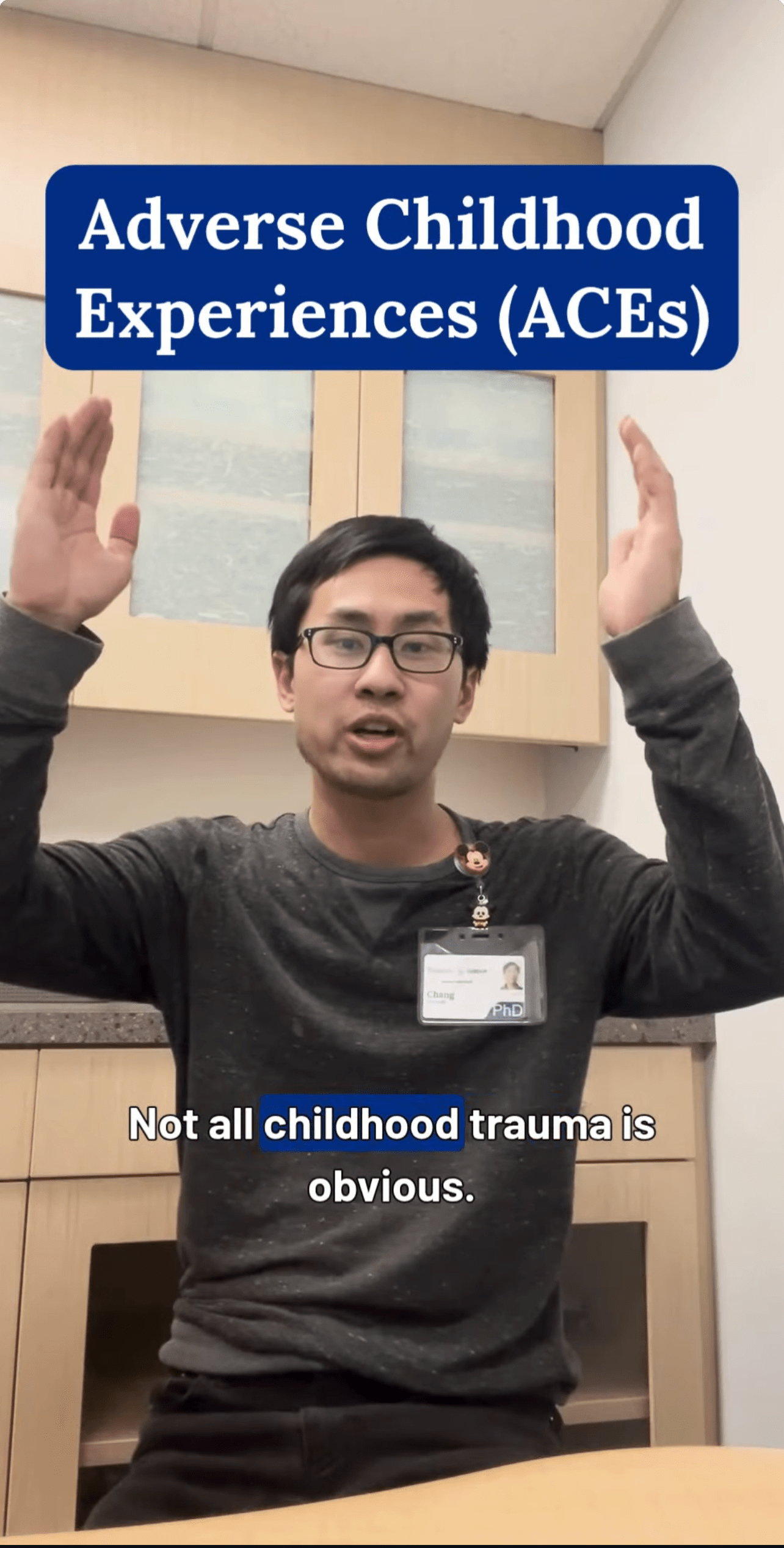
Click the image to hear more from Dr. Chang ⇒
We often discuss events like school shootings or severe abuse as childhood trauma. What are some more common, little discussed types of childhood trauma?
Along with the traditional mental health definition of trauma, which is exposure to an event which threatened death, serious injury, or sexual violence, for children we look primarily at what we call “Adverse Childhood Experiences” or ACEs. These include emotional, physical, or sexual abuse, and emotional or physical neglect. Witnessing domestic violence, household substance abuse, household mental illness, parental separation or and having an incarcerated household member are also ACEs. In my experience, emotional neglect is the least discussed. Emotional neglect happens when caregivers do not meet a child’s emotional needs, for example isolating a child socially or generally withholding affection for a child.
What are some common responses to trauma in different age groups?
Across children, common responses include difficulty concentrating, difficulty sleeping, and heightened sense of anxiety. Up to about age 6, kids often feel helpless and scared, which can look a lot like separation anxiety. Some kids at this age will also go backwards on some of their developmental milestones, for example getting worse at toileting or having more severe tantrums. From around 6 to 12, kids often worry about what they could have done differently to change what happened and continue to worry about their own safety and the safety of those around them. In adolescence, common responses include social withdrawal and self-destructive behaviors.
What are some longer-term symptoms of trauma in kids? How does it show up later in life, perhaps well after the traumatic event or period of life?
As a kid develops, a trauma may affect how they perceive the world. Kids may be extra aware of potential signs of trouble, or may believe that because a bad thing happened to them, they must be a bad kid. Helping kids understand that they are not at fault for their experience can be very helpful. However, a big thing to remember is that not everyone who experiences trauma will develop these symptoms. In fact, most people do NOT end up developing long term symptoms.
What does trauma-informed care look like when working kids who have experienced trauma?
The most important part of trauma informed care is making sure kids feel physically and emotionally safe in their healthcare spaces. This is the first priority because a nervous or uncomfortable kid is going to have different physical and emotional symptoms, and may not be as open about what they are feeling. The more we know, the better!
What is complex trauma and how does it apply when talking about childhood trauma?
Complex trauma is the clinical way of saying multiple or repeated traumatic experiences. In children, this could look like consistent abuse or neglect, or consistent exposure to dangerous situations. We want to be aware of complex trauma because it can cause symptoms to be more engrained in a child’s mindset, and could mean that tackling one specific event should not be the entire focus of treatment.
How is childhood trauma diagnosed and treated? What does treatment look like among different age groups?
Childhood trauma is typically diagnosed with a clinical interview and symptom checklist. Treatment then can look pretty different, depending on what a child is comfortable with! At six or seven and younger, treatment is often more play-focused, and then later on moves into more cognitive skills to manage thoughts and emotions around trauma. There are different types of therapy that specifically address trauma. These include Cognitive Processing Therapy, Trauma Focused Cognitive Behavioral and Therapy Dialectical Behavioral Therapy. Your clinician should help choose the option that feels best to the kid!
What are some signs parents, caregivers, teachers, and others should look for if they suspect a child is exhibiting trauma-related behaviors?
If adults are aware of a traumatic event happening to a child, being on the lookout for behavior that would be more appropriate for a younger child is a sign of trauma for kids regardless of age. For younger kids, imaginary play that is focused around recreating the traumatic event or something similar can also be a sign. For older kids, heightened anxiety and self-isolating behaviors are things to watch out for.
What should an adult do if they suspect they may have symptoms of untreated childhood trauma?
Talk to your doctor! Regardless of symptoms of what your unique symptoms look like, they will be able to connect you to help. There is a lot of information floating around on the internet on what trauma is and how to handle it, but the safest course of action is to talk to a professional.
Learn more and find a physician or advanced practice clinician (APC)
If you or someone you love needs mental health support, our caring experts at Providence Swedish Behavioral Health can help. Visit our website to find care near you.
Do you have questions or concerns about your child’s wellness? Swedish Pediatrics is here to help. Call today to schedule a visit.
If you require an in-person visit or want to consult a doctor virtually for your health concern, Providence Swedish is here for you. Contact Swedish Primary Care to schedule an appointment with a primary care physician. You can also connect virtually with your doctor to review your symptoms, provide instruction and follow up as needed. And with Swedish ExpressCare Virtual, you can receive treatment in minutes for common conditions such as colds, flu, urinary tract infections and more. You can use our provider directory to find a specialist or primary care physician near you.
Information for patients and visitors
Additional resources
Can a video game help reduce PTSD symptoms?
When should you talk to your kids about drugs? Early and often.
Bridging the gaps: rethinking how we communicate can help men and boys thrive
Bullying's scars can last a lifetime
This information is not intended as a substitute for professional medical care. Always follow your healthcare professional's instructions.
Follow us on Facebook, Instagram and X.
The Providence app offers world-class health care with human connection
About the Author
More Content by Swedish Pediatrics Team


