

[5 min read]
In this article:
- If an illness or injury makes it harder to walk, get dressed, return to work, speak clearly, swallow safely or manage daily routines, rehabilitation medicine may be part of the next step in recovery.
- The Acute Rehabilitation Unit at Swedish Cherry Hill Campus has been one of the nation's top inpatient physical rehabilitation centers.
- Providence Swedish’s rehabilitation medicine services include both inpatient and outpatient care.
- Learn more about this award-winning program from a Providence Swedish expert.
If you’ve ever had a serious surgery, illness or injury that required some help with getting back to your activities of daily living, you may have worked with rehabilitation medicine specialists. Sometimes called Physical Medicine & Rehabilitation, the specialty focuses on improving strength, movement, speech, swallowing, balance, pain and day-to-day function.
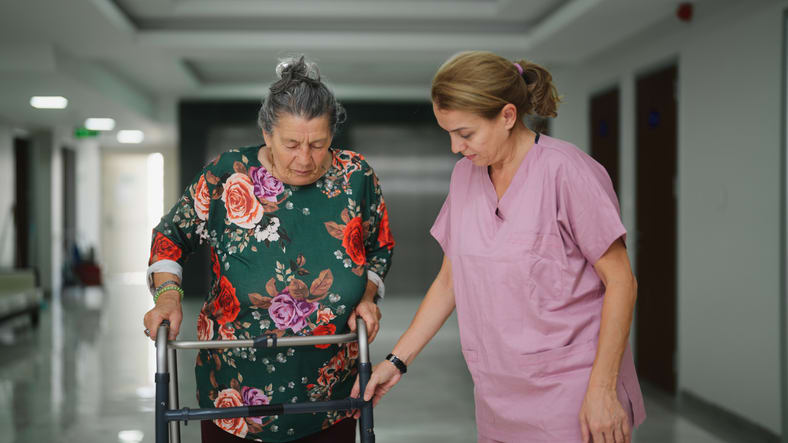
Providence Swedish’s nationally recognized Acute Rehabilitation Unit (ARU) at Swedish Cherry Hill is supported by an interdisciplinary team that includes specially trained nurses, physiatrists (rehabilitation physicians), physical therapists, occupational therapists, dietitians, social workers, and speech-language pathologists.
Led by Paul C. Lim, M.D., Medical Director of ARU, Inpatient Rehab Services, and Neurological Rehabilitation Medicine Clinic, the unit is geared to help patients regain as much mobility and independence as possible after a life-changing medical event. Inpatient rehabilitation is often needed for patients who have disabling illnesses or injuries, such as a stroke, spinal cord injury or brain injury, loss of a limb, or deconditioning after hospitalization. Treatment approaches are highly personalized and tailored to match each patient’s needs, condition and individual progress.
If an illness or injury makes it harder to walk, get dressed, return to work, speak clearly, swallow safely or manage daily routines, rehabilitation medicine may be part of the next step in recovery. The goal is not just healing; it’s helping patients regain function, confidence and quality of life.
“Most of our patients are gung-ho,” says Dr. Lim. “Oftentimes we say at the beginning that this is boot camp, and they are ready for boot camp. Of course we are going to have patients that are elderly, medically fragile maybe not in the greatest shape because of prolonged hospitalization, so they may need adjustments to their treatments to make sure they aren’t too intense.”
A unique, patient-centered program
Providence Swedish’s rehabilitation medicine services include both inpatient and outpatient care. For patients who are medically stable but still need intensive therapy before going home, Providence Swedish offers acute inpatient rehabilitation. Providence Swedish also offers outpatient rehabilitation services, including physical therapy, occupational therapy, speech-language pathology, neurological rehabilitation, vestibular rehabilitation, fall prevention, cancer rehabilitation, pelvic health rehabilitation and lymphedema treatment. That means patients can continue getting the right level of support as they move through recovery.
· Exceptional medical care and intensive therapy. Patients are seen six or seven days a week by a dedicated inpatient physiatrist (rehab physician). As a result, patients receive consistently detailed medical care that provides continuity and oversight of a large interdisciplinary rehab team. Patients also receive three hours of therapy daily, five or six days a week, by highly specialized physical, occupational and speech therapists. Every rehabilitation center is unique. What makes Swedish’s ARU truly comprehensive is not only the advanced technological innovations, but the human drive and motivation and human connection between our caregivers and our patients. After all, in a world of science, people make the difference.
· Personalized treatment planning. There is no one-size-fits-all approach to treat a serious medical condition. For example, stroke affects people in different ways, so the treatment itself must be unique to each patient. For these reasons, the ARU at Swedish Cherry Hill has adopted its interdisciplinary approach where the team of caregivers from different disciplines, in partnership with the patient and their family (who are also invited to be active participants on a patient’s path to recovery), create an individual care plan. With every patient there is an evaluation process, which entails assessing their condition, diagnosis, prognosis, recovery goals and rehabilitation treatment plan.
· Mental health services. Individuals going through a rehabilitation program are challenged on physical, mental and emotional levels. All these elements play critically important roles during the recovery process. Balance in all areas is necessary for a successful recovery. Depression, stress and anxiety are not uncommon throughout the rehabilitation process. Our caregivers strive to provide compassionate, understanding care that’s personalized to each patient’s unique situation and needs. Psychiatrists and chaplains can also be of assistance during a patient’s rehab stay, providing mental health and counseling to care for the whole person.
“We are currently utilizing something called high intensity gait training (HIGT) which is essentially trying to get folks to walk sooner that the traditional therapy time frames,” says Dr. Lim. “Before, if you were really weak you might first work on trying to move around in bed. Then you would sequentially go from sitting to standing. Then we work on balance and so forth. But with HIGT we don’t work on bed mobility and transfers. Patients go straight to walking using as much heavy-duty equipment as possible. We use a treadmill and a harness. We also have more staff to get people walking sooner because walking seems to translate to getting back to other activities without working on them specifically.”
Getting back to daily life
For many patients and families, rehabilitation medicine is the bridge between medical treatment and getting back to real life. It can help people rebuild strength, relearn essential skills and move forward with more independence after a major health setback. At Providence Swedish, that care is built around teamwork, compassion and a plan tailored to each patient. It offers a path toward greater confidence, function and hope.
"I frequently tell my patients and their families that it is a privilege and honor for me to be a part of their recovery from a life altering medical event and to see them improve during their inpatient rehab stay and beyond,” says Dr. Lim.
Learn more and find a physician or advanced care practitioner (ACP)
Our experts at the Swedish Neuroscience Institute offer comprehensive, progressive diagnosis and treatment for a wide range of spine, brain and central nervous system conditions. Telehealth options are available.
Whether you require an in-person visit or want to consult a doctor virtually, you have options. Contact Swedish Primary Care to schedule an appointment with a primary care provider. You can also connect virtually with your provider to review your symptoms, provide instruction and follow up as needed. And with Swedish ExpressCare Virtual you can receive treatment in minutes for common conditions such as colds, flu, urinary tract infections and more. You can use our provider directory to find a specialist or primary care physician near you.
Information for patients and visitors
Additional resources
Swedish Cherry Hill Acute Rehab Unit named among nation's best
Patient health goals are the primary consideration in developing a treatment plan for Parkinson’s
Learn BE FAST, because every second counts during a stroke
Providence Swedish is nationally recognized for providing high-quality stroke care
This information is not intended as a substitute for professional medical care. Always follow your health care professional’s instructions.
Follow us on Facebook, Instagram and X.
The Providence app offers world-class health care with human connection
About the Author
More Content by Swedish Neuroscience Team


