


[6 min read]
In this article:
- Perinatal or postpartum mood and anxiety disorders (PMADs) are the number one complication of pregnancy and childbirth, affecting an estimated 1 in 5 birthing people during or after pregnancy.
- The death of actress Hayden Panettiere and trial of Massachusetts mother Lindsay Clancy, a former nurse, have focused new light on these conditions and the gaps in care for them.
- Providence Swedish's Center for Perinatal Bonding and Support at First Hill provides specialized mental health support for parents during the first postpartum year.
- The Center’s Day Program, the only program of its kind in the Pacific Northwest, is an outpatient program designed for patients experiencing symptoms of PMADs.
- Learn more about the exceptional care and support provided through this unique program and how it's helping new parents and their babies grow and thrive.
The trial of a Massachussets mother, Lindsay Clancy, 36, who is charged with murdering her three young children, and the untimely death of actress Hayden Panettiere, also 36, who candidly shared her struggle with postpartum depression, are focusing new light on postpartum mental health. Specifically the gaps in treatment and understanding, and the challenges many women face in getting proper care for the condition.
At Providence Swedish, the Center for Perinatal Bonding and Support at First Hill provides specialized mental health support for primarily birthing parents during the first postpartum year, helping patients navigate challenges in a safe, compassionate and supportive environment.
Perinatal or postpartum mood and anxiety disorders (PMADs) are the number one complication of pregnancy and childbirth, affecting an estimated 1 in 5 birthing people during or after pregnancy. Mental health conditions that can occur during and after pregnancy, include perinatal depression, anxiety, bipolar disorder and obsessive-compulsive disorder (OCD). PMADs also impact non-birthing parents and impact parents regardless of gender identity. Despite how common these conditions are, many parents suffer in silence, wondering if what they are feeling is normal or unsure about how to or when to get help.
The Center’s Day Program is an outpatient program designed specifically for patients experiencing symptoms of PMADs. It is the only program of its kind in the Pacific Northwest and graduates of the program see on average 20% improvement in their acute anxiety and depression symptoms as well as increased confidence in their ability to parent.
“Our goal is to create a space where parents feel seen, supported and understood,” said Kathleen Preppernau, LICSW, manager of the Center for Perinatal Bonding and Support. “Many parents think they have to push through these feelings on their own, but help is available and recovery is possible.”
When postpartum struggles become overwhelming
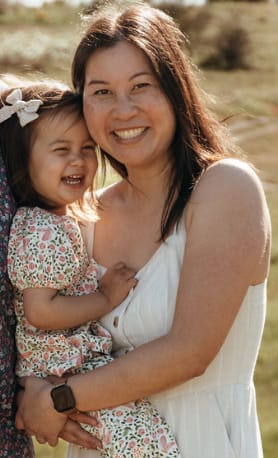
For patient Caitlin Owyang Feldman (shown in photo at right), the challenges of postpartum anxiety and depression
became overwhelming after returning to work when her daughter was five months old.
“It started as second guessing myself, feeling unsure of what to do, being frozen in the kitchen during her naptime unsure if I should eat, shower or nap,” Feldman said. “I was obsessive about my daughter’s health and comfort. On the outside, I was still functioning, working and caring for my baby, but internally I was unraveling.”
Feldman said her symptoms escalated into insomnia, intrusive thoughts and constant fear that she was failing as a mother.
“At a certain point, it became clear that I couldn’t push through on my own anymore,” Feldman said. “The Center for Perinatal Bonding and Support specialized in maternal mental health, which made me feel understood in a way I desperately needed at the time.”
Symptoms of PMADs can look different for every person, but may include:
- Scary or intrusive thoughts
- Feeling inadequate or overwhelmed
- Difficulty bonding or feeling connected to baby
- Increased irritability or rage
- Intense anxiety or panic attacks
- Difficulty relaxing or sleeping (even when baby is sleeping well)
Healing through connection and support
The Day Program offers a structured and supportive environment where patients can openly discuss what they are experiencing while learning practical coping skills and building confidence in their transition to parenthood.
Patients participate in group therapy sessions focused on emotional support, reflective discussion and real-life strategies for managing symptoms. The program also emphasizes baby bonding and attachment, helping parents strengthen their connection with their baby during recovery.
For Feldman, one of the most meaningful parts of the program was being able to continue caring for and bonding with her daughter while receiving treatment.
“One of the hardest parts of postpartum depression and anxiety was the guilt and fear that I was losing my bond with her,” Feldman said. “Healing while still being a mother, rather than separated from that identity, helped me rebuild confidence, connection and trust in myself again.”
Additional services include evaluation by a perinatal psychiatrist and medication management for those interested in exploring treatment options. One of the most meaningful parts of the program is the opportunity for patients to connect with others who are going through similar experiences.
“The combination of compassionate clinical care and connecting with other mothers was the most helpful,” Feldman said. “I was in a room where I didn’t have to explain or hide what I was experiencing.”
Feldman hopes other parents who may be struggling know they do not have to suffer in silence. “If something feels wrong, trust yourself and tell someone,” Feldman said. “You do not have to wait until you hit a breaking point to deserve support. Recovery is possible, and needing help does not make you a bad parent. It makes you human.”
The Day Program runs Monday through Thursday from 9:30 a.m. to 3 p.m. Lunch is provided, and patients are encouraged to bring their non-mobile babies with them. Program length is individualized based on patient needs, though most participants attend between 12 and 16 program days. The program is covered by most insurance plans, including Medicaid.
Learn more and find physician or advanced practice clinician care (APC)
For more information, visit Providence Swedish’s Center for Perinatal Bonding and Support or call 206-320-7288.
Swedish has three birth centers — First Hill, Issaquah and Edmonds — making it convenient for people who live or work in the Seattle, Eastside and North End areas. Swedish patients can take classes, meet other families, get help with lactation and go for new parents and well-baby checkups at The Lytle Center for Pregnancy & Newborns at our First Hill birth center. You can also get expert advice there and help with wellness. Visit our website to learn more about midwives at Swedish and how they can partner with you to create the most personalized birthing experience possible.
If you need a gynecologist, women's health specialist or primary care doctor, Swedish is here for you. Whether you require an in-person visit or want to consult a doctor virtually, you have options. Swedish Virtual Care connects you face-to-face with a nurse practitioner who can review your symptoms, provide instruction and follow up as needed. If you need to find a doctor, you can use our provider directory.
Information for patients and visitors
Additional resources
COMPASSION for pregnant people with substance use disorders
Is a C-section the right choice for you?
At Swedish, midwives’ expansive role in care is helping build community
Comprehensive care for people with complex pregnancies
Time for your prenatal appointment? Get the most out of your visit with these tips from an expert.
The Providence app offers world-class health care with human connection
About the Author
More Content by Swedish Pregnancy & Childbirth Team


