

A recent executive order from Gov. Bob Ferguson places Washington among the first states to take a coordinated approach to menopause-related support in the workplace.
It's the middle of the night. You're wide awake and sweating. Again.
You might also be bone-tired, dealing with anxiety, brain fog and weight fluctuations. You're struggling to keep all the plates spinning at work and at home. A few years ago it didn’t seem this hard. If this sounds familiar, you're not alone.
Millions of women experience menopause symptoms while working, often during their prime earning years. At the same time they stay silent, push through discomfort and pretend everything is fine.
Washington state is trying to change that.
On June 1, 2026, Gov. Bob Ferguson signed an executive order directing Washington state agencies to evaluate how they support employees experiencing menopause and perimenopause. The order also calls for workplace education, training and guidance to help employees understand available resources and accommodations.
"We are losing women in the workforce with tremendous knowledge and experience because we are not doing enough to prepare for a natural stage of life," Ferguson said. "We must do more to support women, and to support employers who want to keep their experienced staff in the workforce."
The move places Washington among the first states to take a broad, coordinated approach to menopause-related workplace support. Health care experts called the order a significant step toward recognizing the reality of menopause.
“Menopause can be a challenging time in life, but life does not stop,” says Ashwini P. Pandit, M.D., an OB/GYN at Providence Swedish Ballard. “This order is a major step in destigmatizing a natural and complex time in women’s lives. Menopause in no way diminishes a woman’s skills, expertise and ability to contribute in the workplace.”
What does the order mean?
The executive order does not create a new law or guarantee new workplace benefits.
Instead, it directs the Washington State Women’s Commission, to partner with state agencies in reviewing policy and best practices, training materials and accessibility, professional licensing credits and guidance for public and private employers.
Potential workplace adjustments include:
- Telework or remote work options
- Access to cold drinking water
- Improved temperature control in work areas
- Flexible dress code considerations
The order also reinforces an important point: Some menopause symptoms may already qualify for workplace accommodations under Washington's existing anti-discrimination laws if those symptoms substantially limit a person's ability to work. Whether someone qualifies depends on their individual circumstances and symptoms.
The effect of menopause at work
Menopause is a natural stage of life, but that doesn't mean it's easy.
Symptoms such as hot flashes, night sweats, insomnia, mood changes, anxiety, fatigue and difficulty concentrating can affect nearly every aspect of daily life. For many women, these changes arrive while they are leading teams, advancing their careers and, at the same time, caring for children, supporting aging parents and managing households.
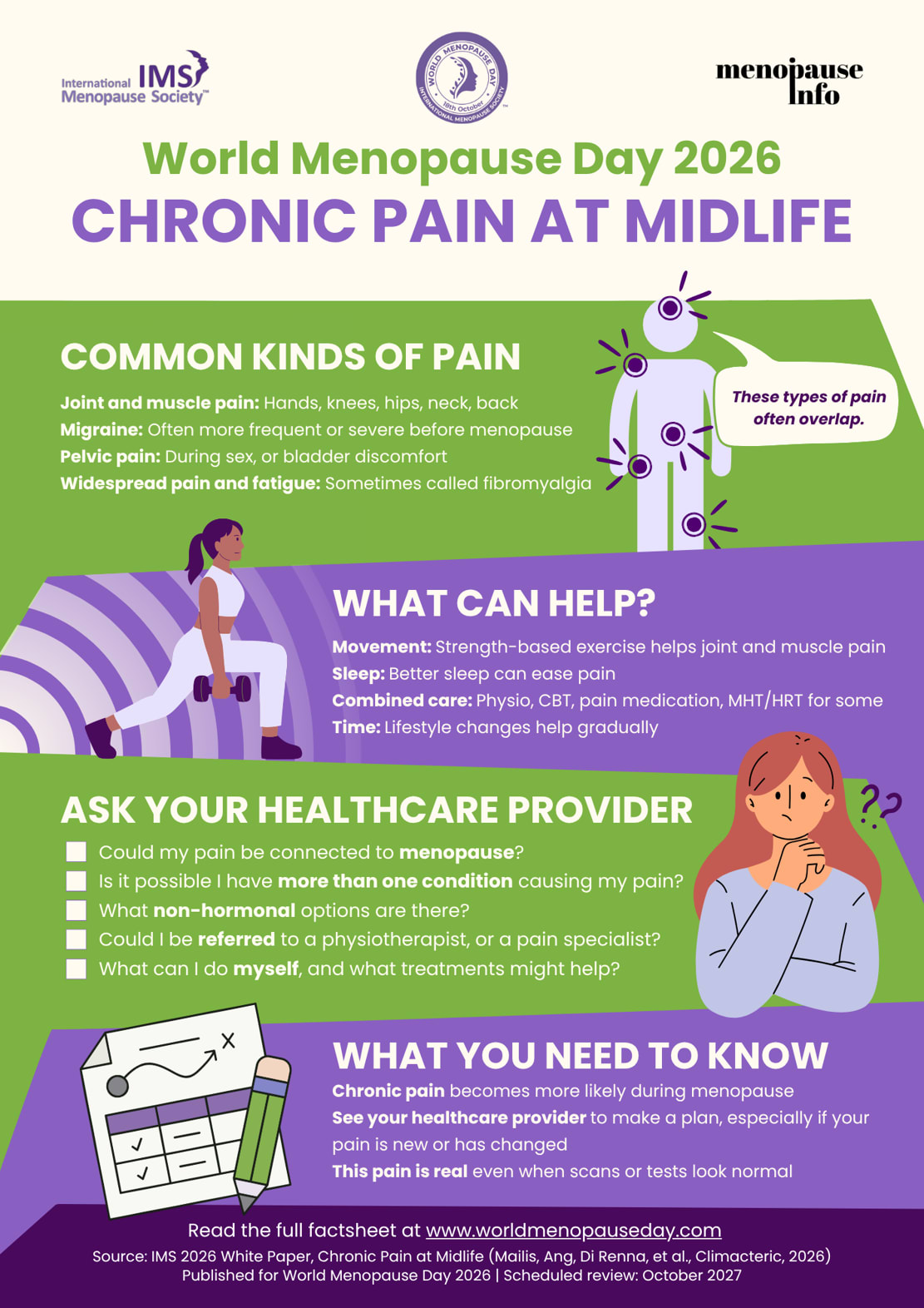
“Women are often surprised at the severity and variety of menopause symptoms, which can include things like ringing, roaring or buzzing that may affect one or both ears frozen shoulder,” says Dr. Pandit. “Chronic pain — the theme of this year’s World Menopause Day — is also a significant issue for many women. It can present in muscles and joints, but also as migraines and whole-body pain and fatigue.”
“It’s extraordinary, if you think about it how much women still get done while suffering in silence,” adds Dr. Pandit. “This needs to change.”
Some women worry they will be perceived differently at work, with brain fog and chronic sleep loss undermining their confidence despite expertise and years of experience. The emotional toll can be significant.
There are economic impacts as well. A 2023 Mayo Clinic Proceedings study estimated that work time lost because of menopause symptoms costs the U.S. economy about $1.8 billion annually.
Why talking about menopause matters
According to the governor's office, 38% of working women in Washington are between ages 40 and 59, the age range most commonly associated with perimenopause and menopause.
Perhaps the most significant aspect of the order is not the policy itself, but the conversation it has sparked about a life stage that affects so many women.
For decades, menopause symptoms have been minimized, dismissed — and even reduced to a punchline. Generations of women whispered among themselves because they didn't feel comfortable talking openly about their experience.
The truth is that acknowledging and discussing menopause openly makes it easier to seek information, access care and advocate for support. It also affirms that menopause is a subject worthy of attention and support.
That's one reason advocates and clinicians view Washington's executive order as an important step forward.
“An ancillary benefit of this order is that it supports opening up the menopause conversation,” says Dr. Pandit. “And that’s good for everyone.”
Menopause is not a weakness. For many women, simply hearing that message may be the most important accommodation of all.
About Providence Swedish
Providence Swedish has served the Puget Sound region since the first Providence hospital opened in Seattle in 1877 and the first Swedish hospital opened in 1910. The two organizations affiliated in 2012 and today comprise the largest health care delivery system in Western Washington, with 24,000 caregivers, eight hospitals and 244 clinics throughout Western Washington – from Everett to Centralia. A not-for-profit family of organizations, Providence Swedish provides more than $545 million in community benefit in the Puget Sound region each year. The health system offers a comprehensive range of services and specialty and subspecialty care in a number of clinical areas, including cancer, cardiovascular health, neurosciences, orthopedics, digestive health and women’s and children’s care. For more information, visit providence.org/swedish.
About the Author
More Content by Swedish Women's Health Team


