

[5 min read]
In this article:
- Naloxone, or Narcan, is a medication designed to rapidly reverse the effects of opioid overdoses.
- You don’t have to be using opioids yourself to encounter an emergency—children can accidentally ingest prescription pills, and teens or adults may experiment with substances without realizing the risks.
- In Washington State, Narcan is legal to carry and widely available, including at all pharmacies, and from community health organizations and some emergency rooms when discharging patients at a high risk of overdose.
Despite advances, the opioid epidemic remains a major public health crisis. According to the U.S. Centers for Disease Control and Prevention (CDC), in 2023, over 105,000 people died from drug overdoses in the United States, with nearly 80,000 (about 76%) of those deaths involving opioids. Synthetic opioids like fentanyl are the primary drivers of these fatalities. Since 1999, more than 800,000 Americans have died from opioid overdoses. The opioid crisis is stubborn and, too often, deeply personal. Many of us live in communities where it’s not unusual to see people struggling with addiction. And some of us live with friends, family members or other loved ones caught in the grip of opioid dependence.
On January 12, the American Medical Association released its 2025 Report on Substance Use and Treatment, which highlighted several key trends including a recent decline in overdose deaths, a reduction in opioid prescriptions and the role expanded access to naloxone, or Narcan, has played in reducing the number of fatal overdoses in the U.S.
When someone overdoses on opioids, their breathing can slow or stop, leading to brain damage or death within minutes. Narcan is a medication designed to rapidly reverse opioid overdoses.
Alexandra Rackoff, M.D., is the Medical Director of Providence Swedish’s Redmond Emergency Department. She took some time recently to share more about Narcan, what it is and how it might help you save someone’s life one day.
“Opioid overdoses can happen to anyone, anywhere. You don’t have to be using opioids yourself to encounter an emergency—children can accidentally ingest prescription pills, and teens or adults may experiment with substances without realizing the risks,” says Dr. Rackoff.
What is Narcan and what is it used for?
“Narcan is the brand name for naloxone, a medication that reverses opioid overdoses. It can save a life when someone has taken too much of an opioid, including fentanyl, oxycodone (Percocet), hydrocodone (Norco, Vicodin), hydromorphone (Dilaudid), or heroin. Narcan works only on opioids and is available for use outside of the hospital in two forms: an injectable form and an intranasal spray, which is the most commonly used and distributed to the public,” says Dr. Rackoff. “It’s important to note that Narcan does not reverse overdoses from alcohol, benzodiazepines (such as Xanax or Valium), or other non-opioid drugs. That said, it is still safe to give if you are unsure what someone has overdosed on.”
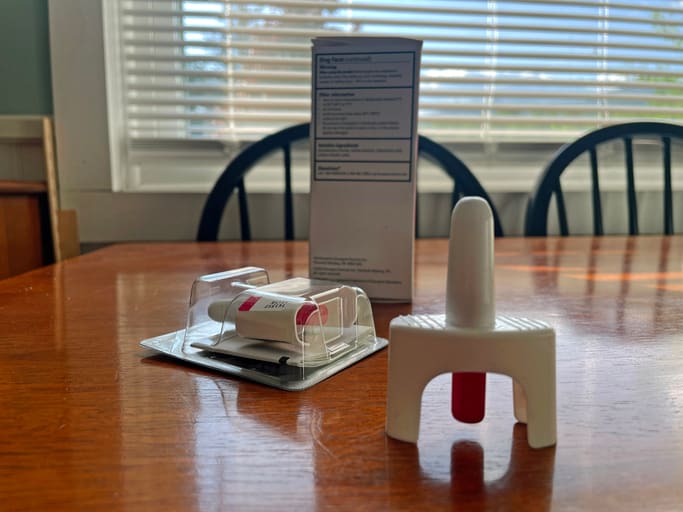
Narcan nasal spray is the most common form for home use. Here’s how to use it in an emergency:
- Recognize the Signs: If someone is unresponsive, has slow or no breathing, blue lips or fingertips, or very small “pinpoint” pupils, suspect an opioid overdose.
- Call 911: Always call for emergency help, even if you have Narcan.
- Administer Narcan: Tilt the person’s head back, insert the nasal spray into one nostril, and press the plunger firmly. The device delivers a single dose.
- Wait and Watch: If the person does not wake up or start breathing normally within 2-3 minutes, give a second dose in the other nostril if available.
- Stay Until Help Arrives: Remain with the person, as the effects of Narcan can wear off and another dose may be needed.
“And it is important to remember that in an overdose situation Narcan is safe, even if you’re unsure whether opioids are involved. It will not harm someone if opioids are not present,” Dr. Rackoff emphasizes.
Where can I get Narcan? Is it legal for me to have at home?
In Washington state, Narcan is widely available, including at all pharmacies and from some emergency rooms when discharging patients at a high risk of overdose. Public EMS ambulances also carry Narcan.
“It’s also free by mail from public health programs,” says Dr. Rackoff. “And your insurance may cover it with a prescription, so check your plan’s information.”
In fact, Washington State law (RCW 69.41.095) allows any person or organization to possess Narcan. Additionally, Washington’s Good Samaritan Law protects individuals from prosecution for drug possession if they:
- Call 911.
- Provide emergency care.
- Help get someone to the emergency department during an overdose.
What should I do if I think someone is overdosing?
Look for signs of an opioid overdose, which include:
- Very slow, shallow, or no breathing
- Extreme sleepiness or inability to wake up
- No movement or response
- Bluish or gray lips or fingertips
If you suspect an overdose:
- Try to wake the person by calling their name and shaking them.
- If they do not respond, call 911 immediately.
- Administer Narcan:
- Spray deep into one nostril, or
- If using the injectable form, inject into a large muscle such as the thigh or upper arm
- Stay with the person until help arrives.
“Narcan works by blocking opioids from attaching to receptors in the brain, so if you aren’t using opioids and you’re exposed, it won’t affect you. In fact, it has no harmful effects if opioids are not present. And if it is administered to someone who is overdosing on opioids, they may begin breathing again and wake up within minutes. If opioids are not the cause, Narcan won’t worsen their condition,” says Dr. Rackoff.
Opioid overdoses can happen in any community
Even if you don’t think the opioid crisis is close-to-home, people in every community are at risk. Middle and high school students may have access to opioids such as fentanyl or oxycodone, and teen overdose deaths occur every year. And family members may not know a teen is experimenting with drugs until it is too late.
Additionally, opioids are commonly prescribed for pain to adults of all ages, with older adults especially vulnerable to overdose because of medication sensitivity and slower metabolism. And across-the-board, the risk of overdose increases when opioids are combined with alcohol or sleep medications.
“In these situations, having Narcan nearby can make the difference between life and death,” says Dr. Rackoff. “In fact, the CDC recommends that anyone who takes opioids, lives with someone who does, or works in a community setting should keep Narcan nearby.”
Learn more and find a physician or advanced practice clinician (APC)
If you or someone you love need help with substance use, support is available from our caring experts at Providence Swedish Behavioral Health. Visit our website to find care near you.
If you require an in-person visit or want to consult a doctor virtually for your health concern, Providence Swedish is here for you. Contact Swedish Primary Care to schedule an appointment with a primary care physician. You can also connect virtually with your doctor to review your symptoms, provide instruction and follow up as needed. And with Swedish ExpressCare Virtual, you can receive treatment in minutes for common conditions such as colds, flu, urinary tract infections and more. You can use our provider directory to find a specialist or primary care physician near you.
Information for patients and visitors
Additional resources
Try Dry January for a physical and mental health reset
Mindful drinking – how much alcohol is too much?
Don’t have another. Alcohol consumption can raise atrial fibrillation risk
This information is not intended as a substitute for professional medical care. Always follow your healthcare professional's instructions.
Follow us on Facebook, Instagram and X.
The Providence app offers world-class health care with human connection


