

[5 min read]
In this blog:
- Vaccination is your best defense against measles. Vaccines are proven and reliable.
- Measles can have long-term effects on your immune system, leaving you vulnerable to other diseases.
- Measles is especially dangerous for babies and young children.
- Read this blog to learn more from a Swedish pediatric infectious disease expert.
Measles, once thought eliminated in the United States, is making a serious national resurgence. It's important to know how to protect yourself and your family.
As of Nov.12, there have been 5,412 confirmed cases of measles in 47 jurisdictions across the U.S., according to the U.S. Centers for Disease Control and Prevention (CDC). The Washington State Department of Health is also reporting a concerning increase in measles: 58 reported cases, a fivefold increase over 2025.
On Nov. 12, the United States officially lost its measles elimination status, which experts called "a defeat for public health" and "a preventable failure to protect children."
Measles is sometimes thought of as an ordinary childhood illness that comes with a fever and rash. While most infections are not serious, measles is a highly contagious viral infection that can lead to serious complications, including pneumonia and brain inflammation. In rare cases, it can lead to permanent disability or death.
The disease poses particular risks for babies, young children and pregnant people. During pregnancy, the infection can increase the risk of serious illness as well as pregnancy loss, premature birth and low birth weight. Babies and young children are also at greater risk for serious complications.
We spoke with Monika Dietrich, M.D., FAAP, a pediatric infectious disease specialist at Providence Swedish, about how to recognize measles, when to seek care and what families can do to protect themselves.
What symptoms should I look for?
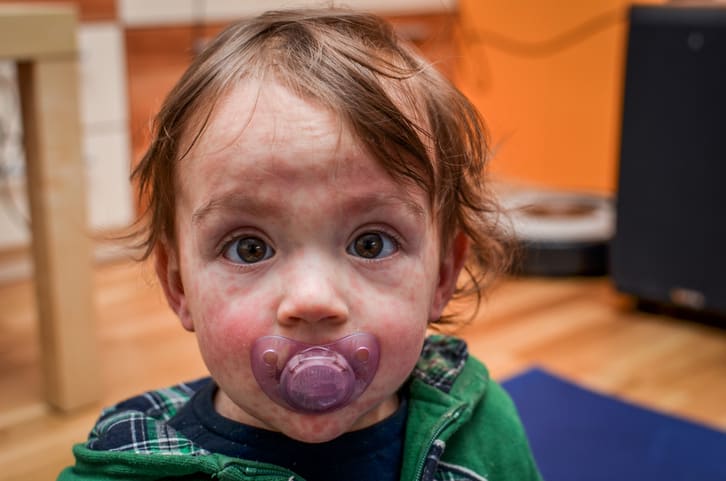
Measles usually begins with high fever, cough, runny nose and red, watery eyes. A few days later, a rash typically appears on the face and spreads down the body.
Tiny white spots, called Koplik spots, may also appear inside the mouth about two to three days after initial symptoms begin.
What complications can measles cause?
Most people recover from measles, but the infection can come with serious complications, including:
- Pneumonia and other breathing problems
- Severe dehydration
- Brain inflammation, or encephalitis
- Hospitalization
- In rare cases, death
Measles can also cause “immune amnesia,” which affects the immune system's ability to recognize and fight infections it encountered before measles. In rare cases, measles can cause a serious and fatal neurological condition that develops years after the initial infection.
Evidence has shown us that vaccination offers safe, strong and reliable protection against measles. One dose of the measles, mumps and rubella (MMR) vaccine is about 93% effective at preventing measles, and two doses are about 97% effective.
When should I seek emergency care?
Seek emergency medical care for:
- Difficulty breathing, blue lips, or, in babies, a chest that sinks in with each breath, flaring nostrils or using the belly muscles to breathe.
- Severe dehydration, including significantly fewer wet diapers or trips to the bathroom, not drinking or unusual weakness.
- Neurologic symptoms, including seizures, extreme sleepiness or confusion, or a severe headache with sensitivity to light.
Does someone with measles need to isolate?
Yes. A person with measles can spread the virus from four days before the rash appears through four days afterward, so people can be contagious before they realize they have measles.
If you think you or your child may have measles, if you can and it is safe, call your health care provider first before going to a clinic, urgent care or emergency department. Calling first allows your care team to give you instructions and take precautions to avoid exposing other patients and staff.
How can I protect my family from measles?
Evidence has shown us that vaccination offers safe, strong and reliable protection against measles. One dose of the measles, mumps and rubella (MMR) vaccine is about 93% effective at preventing measles, and two doses are about 97% effective.
Children routinely receive their first MMR vaccination at 12 to 15 months and their second at 4 to 6 years.
In some situations, including outbreaks, public health officials may recommend an early dose for babies 6 through 11 months old who are at increased risk. Children who receive an early dose will still need the routinely recommended two-dose series.
If you or your child has been exposed to measles and isn't fully vaccinated, contact your healthcare provider right away. For eligible people without evidence of immunity, receiving the MMR vaccine within 72 hours of exposure may provide protection or make the illness less severe.
For people who can't receive the MMR vaccine, including pregnant people without evidence of immunity, babies younger than 6 months and some people with weakened immune systems, your doctor may give immune globulin within a few days of exposure.
Is the measles vaccine safe?
Yes. The MMR vaccine has been widely studied and has an established safety record.
Most side effects are mild and temporary. They may include some soreness or redness where the vaccine was given or a slight fever, rash or joint pain or stiffness.
Studies have repeatedly found no link between the MMR vaccine and autism. And if you aren’t sure if you are up to date with your vaccinations, talk with your doctor. They’ll review your vaccination history, answer questions and help determine whether you need another dose.
Learn more and find a physician or advanced practice clinician (APC)
When you have questions or concerns about your child’s wellness, Swedish Pediatrics is here to help. Call today to schedule a visit.
You can also contact Swedish Primary Care to schedule an appointment with a primary care physician. If you or your child has an illness, you can connect virtually with your care team who can review your symptoms and give instructions and follow-up care as needed. With Swedish ExpressCare Virtual, you can receive treatment in minutes for common conditions such as colds, flu, urinary tract infections and more. You can use our provider directory to find a specialist or primary care physician near you.
Information for patients and visitors
Additional resources
Does your family have sniffles and coughs on repeat?
When kids need specialized care, families choose Providence Swedish
Misinformation is triggering vaccine doubt and driving a rise in preventable pediatric illness
Parents, it might be time to rethink this old standby for coughs, colds and allergies
Your kiddos have unique health needs from 6 to 12. Here’s some guidance to help them thrive.
This information is not intended as a substitute for professional medical care. Always follow your health care professional's instructions.
The Providence app offers world-class health care with human connection
Follow us on Facebook, Instagram and X.
About the Author
More Content by Swedish Primary Care Team


