

In this article:
- Jed Gorden, M.D., and Candice Wilshire, M.D., MPH, received a $100,000 Imagination Grant from the Kuni Foundation.
- This grant enables their research into the pleural space for insights into lung cancer prognosis, quality of life, and treatment approaches.
- This grant was awarded by Vancouver-based Kuni Foundation, which funds cancer research and inclusion initiatives.
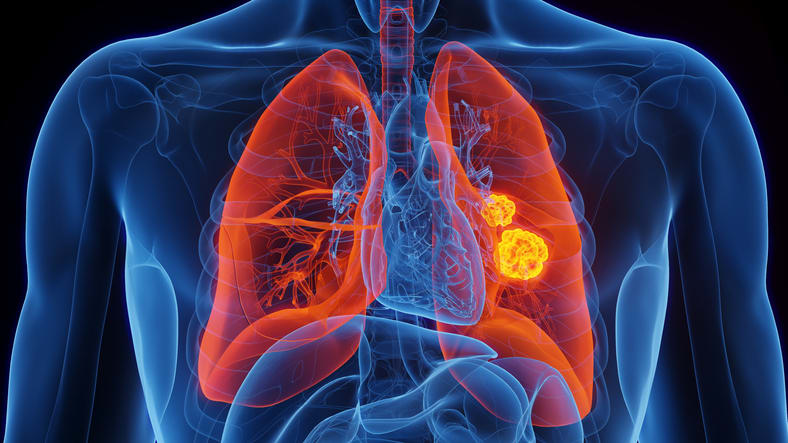
Lung cancer is the leading cause of cancer-related death in the United States. Yet there are still many unknowns about the disease, such as why more non-smokers are being diagnosed, what drives a worse prognosis, and whether current drugs are effective at treating the cancer.
Thanks to a generous grant from the Kuni Foundation, a Vancouver, Washington–based organization committed to accelerating cancer research and inclusion initiatives in the Pacific Northwest, two Providence Swedish researchers are now able to dig into these unknowns.
Jed Gorden, M.D., director of the Center for Lung Research in Honor of Wayne Gittinger at Providence Swedish Cancer Institute, and research program director Candice Wilshire, M.D., MPH, received the Kuni Foundation’s $100,000 Imagination Grant, awarded to innovative cancer research in the pursuit of impactful or unmet needs. Their project will examine pleural fluid as the new frontier for precision oncology.
The pleural space, the area around the lungs, is affected by several diseases, in particular cancer. When the pleural space is impacted, it results in adverse symptoms for patients, affecting not only their quality of life but potentially their long-term clinical well-being.
“Someone who has fluid build-up in their lungs will cause them to be enormously symptomatic,” Dr. Gorden says. “If we better understand it, we can figure out how to control their symptoms and live better with cancer. On top of that, we are beginning to understand that the pleural space is a unique space that may allow cancer cells to escape treatment or render them ineffective. Looking at pleural fluid will give us a window into their cancer.”
With this grant, Drs. Gorden and Wilshire aim to pursue two main objectives in the pleural space: First, defining the clinical characteristics of patients and investigating how fluid build-up in the pleural space affects outcomes, especially for patients with lung cancer driven by a gene mutation. And second, saving pleural fluid samples in a biobank to inform future translational research regarding the cancer cells and this unique microenvironment. The second pursuit will build upon work previously funded by the Kuni Foundation under the care of Sid Devarakonda, M.D., who spearheads the thoracic oncology clinical and research program at Providence Swedish Cancer Institute.
“That’s the advantage and power of the Kuni Foundation,” Dr. Gorden says. “It’s allowing us to leverage what we see clinically in interventional pulmonary and thoracic surgery, combine it with our research at the Center for Lung Research in Honor of Wayne Gittinger, and couple it with the work of our medical oncology colleagues. Kuni Foundation is truly a force multiplier, supporting both translational and multidisciplinary ideas.”
By taking this dual research approach, our Providence Swedish researchers hope to unlock powerful new insights into lung cancer to improve the treatment, care, and well-being of patients everywhere.
About the Kuni Foundation
The Kuni Foundation accelerates the power of human potential, investing in scientists who propel disruptive, transformative approaches to cancer research in service to detection, treatment, and a cure. The foundation supports the exploration of bold ideas that translate into breakthrough treatments, improved outcomes for underserved communities, and affordable therapeutic approaches.
About the Swedish Foundation
Your generous gift helps support a healthy tomorrow for everyone in every community we serve. Learn about more ways to give to the Swedish Foundation or make a direct donation online at swedishfoundation.org. You can also contact the Foundation at 206-368-2738 or email foundation@swedish.org. Thank you for helping us shape the future of health care. We can’t do it without you.
About Providence Swedish
Providence Swedish has served the Puget Sound region since the first Providence hospital opened in Seattle in 1877 and the first Swedish hospital opened in 1910. The two organizations affiliated in 2012 and today comprise the largest health care delivery system in Western Washington, with 24,000 caregivers, eight hospitals and 244 clinics throughout Western Washington – from Everett to Centralia. A not-for-profit family of organizations, Providence Swedish provides more than $545 million in community benefit in the Puget Sound region each year. The health system offers a comprehensive range of services and specialty and subspecialty care in a number of clinical areas, including cancer, cardiovascular health, neurosciences, orthopedics, digestive health and women’s and children’s care. For more information, visit providence.org/swedish.
About the Author
More Content by Swedish Cancer Team


